This ESC Level 2 Certified course provides a structured introduction to investigating damp, mould and condensation in buildings constructed with solid walls, lime mortars and other vapour-permeable materials.
Raise your awareness of building pathology and apply structured, evidence-based investigation principles while respecting traditional building performance, heritage significance and the risks of inappropriate intervention.
This course is delivered on demand through approximately seven hours of structured online learning. Short knowledge checks throughout help reinforce the subject areas covered.
Access the course online and work through the course content at your own pace.
Complete short checks as you progress and gain 7 hours of CPD on successful completion.
The course explains how traditional and historic buildings absorb, buffer and release moisture, and why their performance differs fundamentally from much modern construction.
It combines building pathology, structured investigation, heritage responsibilities and appropriate remedial approaches to reduce misdiagnosis and damage to historic fabric.
The course begins with essential introductory materials and progresses through four structured units covering moisture in traditional and historic buildings, inspection, conclusions, reporting and implementation. Short knowledge checks throughout the course help reinforce your understanding as you progress.
This course is for people involved in the investigation, retrofit, repair, adaptation or ongoing management of traditional and historic buildings.
Contact us to discuss group bookings or practical training for your organisation.

Professor John Edwards
MA, DipBldgCons, CEnv, FCIOB, FRICS, IHBC
Professor John Edwards, MA, DipBldgCons, CEnv, FCIOB, FRICS, IHBC developed this Level 2 course to apply structured, evidence-based investigation principles to the performance of traditional and historic buildings.
Professor Edwards is a practising independent surveyor in private practice and Director of Edwards Hart Consultants. He began defect investigation, including moisture analysis and monitoring in 1981. His experience in sustainable refurbishment and energy efficiency retrofit spans thousands of buildings.
Professor Edwards has led in the development of industry best practice, undertaking research and contributing to the development of standards and guidance. He serves on expert panels and BSI committees, helping to shape professional and technical standards within the built environment.
Certified to work on traditional and historic buildings, Professor Edwards is acknowledged as an expert by heritage bodies (certified/accredited by RICS, IHBC, CIOB).
Find out more about Professor John EdwardsThe Traditional and Historic Buildings course is one of two building-specific Level 2 routes within a structured journey from basic awareness through to advanced investigation.
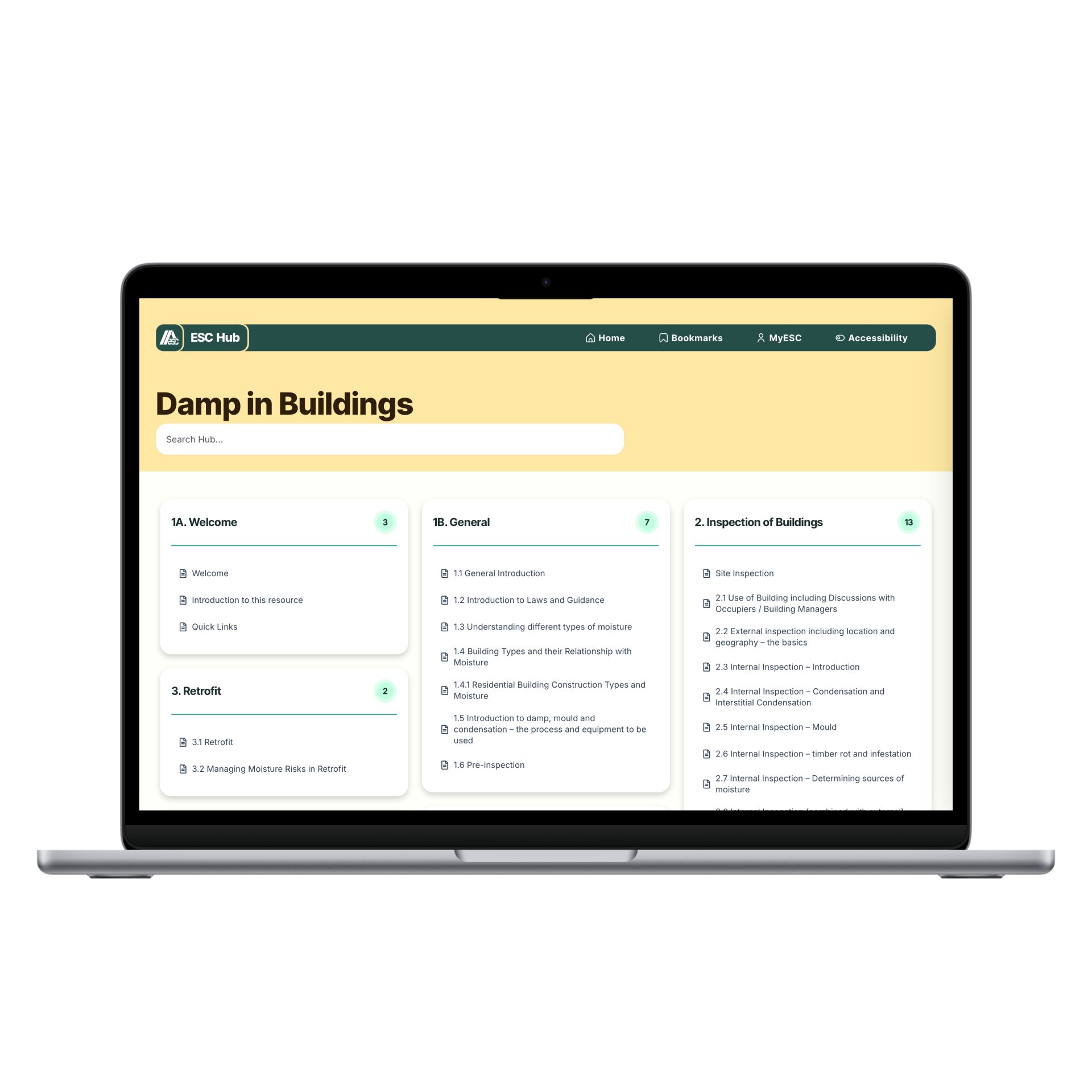
Get 12 months free access. The ESC Hub is our online knowledge centre for damp, mould, condensation and building pathology. It gives you technical guidance, standards, references, legal and regulatory updates, investigation support and practical resources beyond what can be covered within the course.
This means learning can continue after formal study, helping you keep your knowledge current and apply it with greater confidence in real buildings.
Simply choose “FlexPay” at check-out or look out for this icon:  you will then be taken to iwocaPay to choose the type of flexible payment you want.